
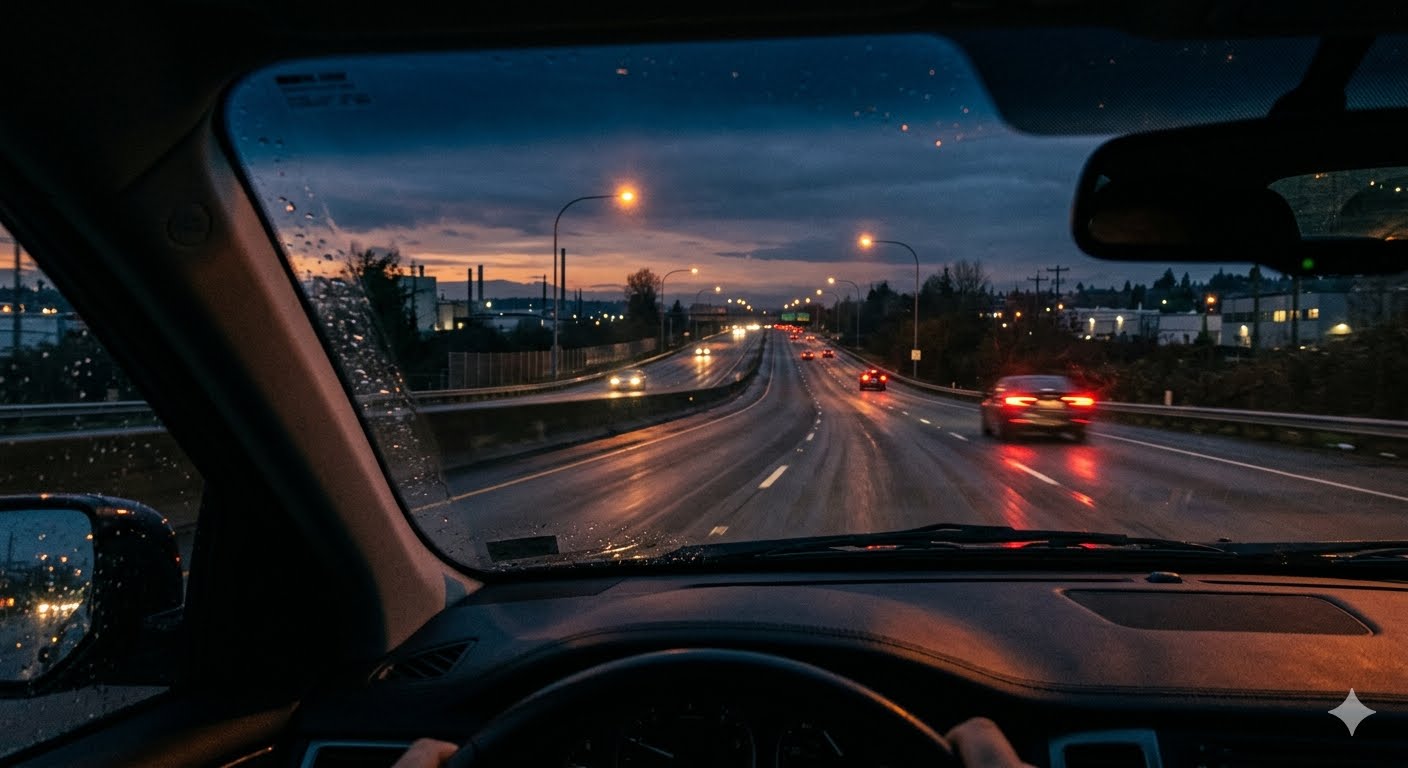
If a camera could have caught the person who killed your neighbor, and the only price was that everyone’s movements were recorded, would you still say no?
The logic is almost embarrassingly simple. Flock cameras work. They solve crimes. A fleeing murderer caught because their license plate was scanned at 2 a.m. is a murderer who gets apprehended instead of disappearing. A child predator identified because someone tracked their car is a predator who gets stopped.
The argument isn’t abstract. It’s practical. Police use Flock data to solve actual crimes. Fugitives who would otherwise vanish for years are apprehended within days. Murders get solved. Missing persons get found. The technology has a measurable track record. Not perfect, but real.
And here’s where the real conviction lands: if you’re not breaking the law, nothing changes for you. Your anonymity on the road isn’t a right you have — it’s an absence of observation you currently enjoy by default. You drive to work, the grocery store, your therapist’s office, and no one is cataloging it. But that’s not a feature; it’s just how things have always been. And if cataloging it solves murders, why should we privilege an accident of history over actual human safety?
The emotional core here isn’t authoritarian. It’s not about control for control’s sake. It’s the legitimate terror of the parent who read about another child abduction, the neighbor who saw someone’s house broken into, the impulse that says: we have a tool that could prevent this, and we’re choosing not to use it. That’s not small. That weight is real.
But then you run into reality, and reality is messier than the safety argument accounts for.
Surveillance infrastructure built for one purpose has, throughout history, been repurposed for another. The systems installed to catch violent criminals today become the systems used to track dissidents, track political opponents, suppress minorities, or just harass inconvenient people tomorrow. Not because the people building it intended that. But because power, once embedded in infrastructure, has a way of finding new uses.
False identifications happen. Not rarely — regularly. A Black man is arrested because a Flock camera tagged his car as matching a description. The photo doesn’t look like him. The license plate was similar but not exact. He spends three days in jail before the misidentification is cleared. That’s not a hypothetical. It’s happening now.
And there’s something else: the assumption embedded in “if used properly.” That phrase contains an entire worldview. It assumes that oversight will be adequate, that power won’t be abused, that systems built today won’t be exploited tomorrow by people with different values or fewer scruples. It assumes trust in institutions at a time when trust in institutions is fractured.
History doesn’t just suggest this is naive. History demonstrates it.
The Japanese-American internment camps weren’t built because someone explicitly said “let’s create an internment infrastructure.” They were built through accumulated surveillance and documentation tools, each justified at the time. The systems used by authoritarian regimes didn’t announce themselves as authoritarian. They announced themselves as solutions to real problems.
The Consequentialist Argument: If Flock cameras prevent even one murder, that’s a utilitarian win. The math is simple. One prevented death outweighs the abstract anxiety of many people about surveillance. The greater good.
But then a consequentialist has to ask a harder question: To whom is it the greater good? If you’re privileged and unlikely to be misidentified or targeted, the calculus feels different than if you’re part of a community already over-policed, already misidentified by systems, already bearing the surveillance burden unequally.
The Deontological Angle: Do citizens have a right to privacy, or do we have an obligation to public safety? These aren’t automatically compatible. A deontologist might say: some things are violations regardless of outcome. The continuous tracking of movement is a violation of autonomy, even if it produces good consequences. Rights exist to protect people from having good outcomes imposed on them.
Care Ethics: Who bears the burden? Care ethics asks not “what produces the best outcome” but “who is affected and how.” Flock cameras aren’t equally distributed. They’re concentrated in certain neighborhoods. The surveillance weight falls heaviest on people who are already surveilled most — poor communities, communities of color, immigrants. The technology has a face, and that face isn’t random.
Virtue Ethics: What kind of society do we become if we normalize the continuous recording of movement? Not because of the outcome, but because of what the practice itself does to our character and our relationship to freedom? A virtuous person might ask: even if cameras make us safer, what does it cost us to live in a world where we’re always potentially watched?
Machiavellian Pragmatism: Does it work? Yes. Can it be abused? Absolutely. But all power can be abused. The question is whether the benefit outweighs the risk. And for the pragmatist, the answer might be: yes, if the benefit is real and the risk is managed. You can’t let perfect be the enemy of good.
None of these frameworks are stupid. None of them are obviously wrong. They’re just looking at different parts of the problem.
Loop back to what’s actually driving each position, and you find something worth taking seriously.
The person who wants the cameras isn’t greedy for control. They’re terrified. They’ve absorbed a world where predators exist, where violence is real, where having a tool and choosing not to use it feels like complicity. That fear is legitimate. Crime is real. Suffering is real.
The person who opposes them isn’t naive or indifferent to suffering. They’re terrified too — of a different thing. They’ve absorbed the weight of history, the pattern of power being abused, the knowledge that surveillance infrastructure built to protect eventually serves to oppress. That fear is equally legitimate.
The problem is that both terrors are true, and they’re in direct conflict. You can reduce crime through surveillance, and you can also enable abuse through the same infrastructure. Both things are possible. Both happen.
What emotion alone does — what tribe alone does — is let you ignore one terror to prioritize the other. The pro-surveillance person convinces themselves that “proper oversight” will prevent abuse. The anti-surveillance person convinces themselves that crime prevention isn’t worth the risk. Both are comforting stories. Both are incomplete.
The question isn’t actually “should we use Flock cameras?” because that’s already decided in most jurisdictions. The cameras are already there.
The real question is more uncomfortable: What are we willing to trade, and have we actually thought through what we’re trading?
One path forward: Accept the cameras as a permanent feature. Build in oversight — real oversight, not performative. Require transparency reports. Establish boundaries on use. Accept that this is the world we live in now, and do your best to prevent abuse.
The cost: you live in a world where your movements are recorded. The benefit: criminals are caught faster. You have to believe the oversight actually works.
Another path: Resist the infrastructure. Lobby to remove it. Accept that some criminals will go uncaught, some murders unsolved, some children unfound. Choose the principle over the pragmatism.
The cost: real harm from crimes that could have been prevented. The benefit: you maintain the principle that movement shouldn’t be tracked.
A third path: Accept cameras in certain contexts (violent crime, missing children) but restrict them elsewhere. Create a tiered system based on severity and need.
The cost: complexity, potential inconsistency, the question of who decides the tier. The benefit: you get some safety and some privacy, though fully satisfying neither.
Or a deeper question: What if the real issue isn’t the cameras themselves but the fact that we’re trying to solve a social problem (crime, especially violent crime) with a technological solution? What if what we’re actually trading isn’t privacy for safety, but privacy for the feeling of safety while ignoring the roots of violence — poverty, desperation, lack of opportunity?
That’s the uncomfortable part. The cameras feel like we’re doing something. They probably do catch some criminals. But they might also distract us from actually addressing why the crime is happening in the first place.
None of these paths are wrong. None of them fully resolves the tension. And that’s the actual question you have to answer: Which trade-off can you live with? Which fear are you more willing to accept?
You can only choose which one matters more to you — and be honest about what you’re giving up to make that choice.

Leave a Reply