
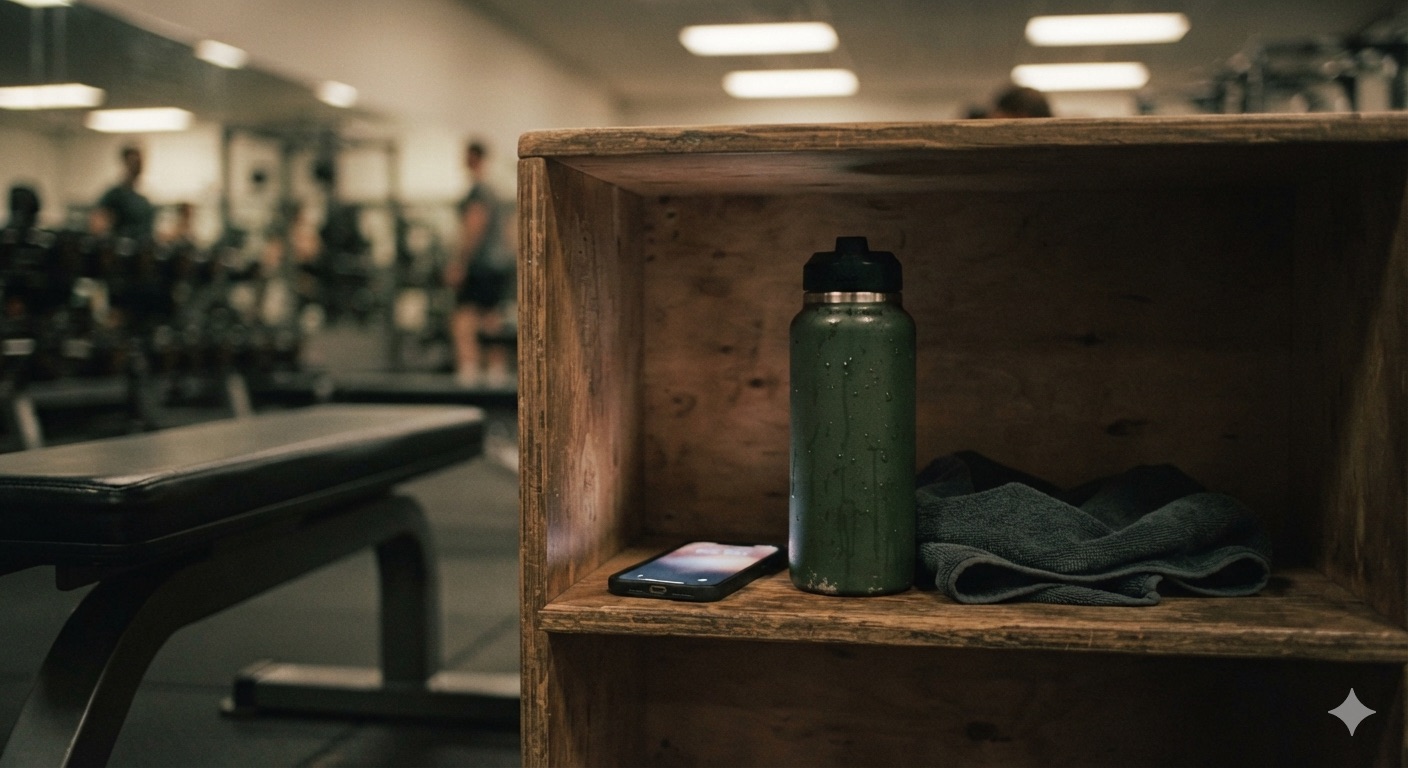
You finish the last set and just sit there for a second on the edge of the bench, breathing hard, and it’s good — that particular kind of tired that feels like proof of something. You did the thing. Nobody made you do it. For about four seconds, that’s enough.
Then the phone, because it’s always right there in the little cubby with your water bottle, and your thumb is already moving before you’ve decided anything.
The first post is someone mid-transformation, before and after, six months apart, and you tell yourself you’re not really looking, just scrolling, but you’re looking. Then a guy your age doing something with a barbell you’ve never even attempted. Then a woman explaining her exact macros in a caption longer than anything you’ve read all week. You didn’t ask for any of this. It just arrives, sorted by an algorithm that has learned, with some precision, exactly which comparisons will keep your thumb moving.
And somewhere in there, the good tired starts to curdle into something else. Not pride anymore. An accounting. You start doing math you didn’t agree to do — their six months against your six months, their genetics against yours, a highlight reel against the actual, sweaty, unglamorous thing you just finished. You are comparing a finished product to a behind-the-scenes.
Here’s the strange part: nothing about your workout changed. Same sets, same reps, same effort. The only thing that moved was the fifteen seconds after it, and now the whole thing feels smaller than it did when you were still breathing hard on the bench.
You put the phone back in the cubby. The tired is still there, technically. It’s just harder to find under everything you just picked up that wasn’t yours to carry.
What exactly did you finish today — the workout, or the fifteen seconds after it?
“Comparison is the thief of joy.” — Theodore Roosevelt (debated)

Leave a Reply