
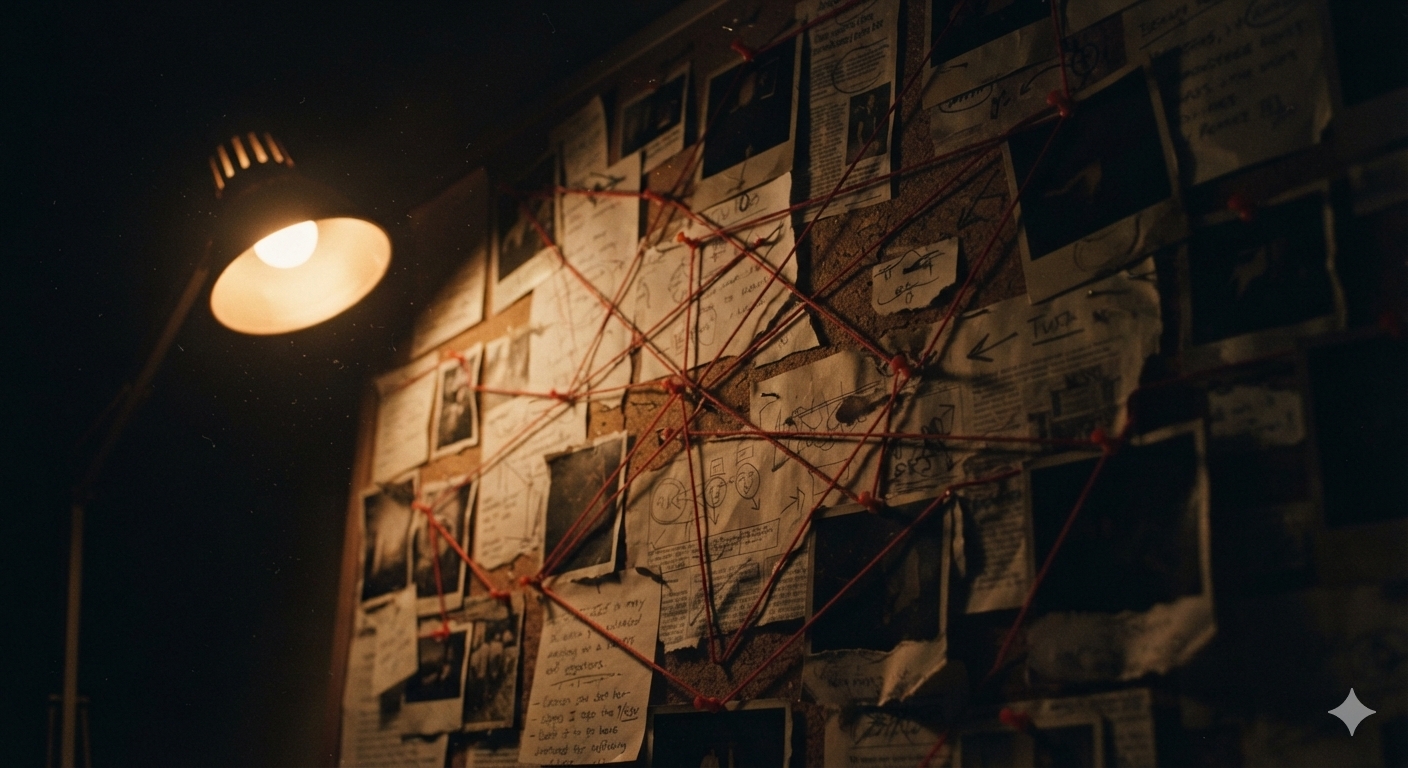
Somebody in your life has one. Not a passing suspicion. An actual theory, complete with sources, screenshots, and a specific reason the official explanation doesn’t hold up. You’ve sat across from them while they laid it out, and for one uncomfortable second, some of it actually tracked.
That’s the real question underneath every conspiracy theory. Is the person paranoid, or are they the only one in the room actually paying attention? Paranoia or pattern recognition — most people never work out which one they were doing until long after it mattered.
Sometimes the Theory Turns Out to Be Right
Start there, because it happens more often than people like to admit. Governments keep real secrets — sometimes for defensible reasons, sometimes because secrecy is simply easier than being answerable to anyone. Programs have run for years before the public outside them ever learned they existed. A budget line disappears from a report, a classification stays in place past the point anyone can explain why, and the real story only surfaces after a lawsuit or a leak forces it into daylight. An agency builds and expands surveillance infrastructure well before citizens get a straight account of what it’s actually capable of. This site already explored that tension once, in The Flock Camera Question, without needing to reopen the argument here.
None of that requires a single villain hiding in a room somewhere. It only requires an institution large enough that no one inside feels responsible for what the whole is doing. That’s arguably worse than a villain: at least you can find and name a villain.
So when a conspiracy theory starts from a real, documented gap between what officials said and what actually happened, dismissing it on principle isn’t skepticism. It’s just a different, quieter kind of certainty: the belief that nothing hidden ever stays hidden for long. History hasn’t been especially kind to that certainty either.
Sometimes It’s Paranoia Wearing Research as a Costume
But that instinct doesn’t come with an off switch, and that should worry you more than the last point did. The same brain that finds a real signal in noise also finds a face in wood grain and a warning in a license plate, with identical confidence in both cases. It doesn’t check its results before handing you certainty. The feeling shows up first, fully formed, and the research arrives afterward to defend a conclusion it already reached — the same shortcut this site already examined once, in Fast Opinions vs. Earned Ones.
That’s how a conspiracy theory keeps itself alive long after the evidence should have killed it. Silence confirms it. A denial confirms it. Counter-evidence just proves the reach goes further than anyone previously realized. Once a theory can’t be wrong even in principle, it stops being a claim about the world and becomes a claim about the believer instead — specifically, that they’re one of the few people paying attention while everyone else sleepwalks.
And underneath it all is a cost few people name honestly. People who follow a theory this far usually end up more isolated, not more informed. Quieter at dinner. Slower to trust the people standing closest to them. Awake later than they should be, still scrolling through one more thread that promises to connect the last piece. Being right about one hidden thing has never been worth what it costs to keep chasing the next.
Calling It a Conspiracy Theory Ends the Conversation
Except notice what that same label does once you point it the other direction. Conspiracy theorist is also the exact term institutions reach for the moment scrutiny turns inconvenient. It doesn’t answer the question. It just makes the person asking sound unstable enough that the room stops listening to them. That isn’t a hypothetical trick a government might someday use. It’s one of the oldest moves available to anyone who benefits from a subject staying closed.
So the label doesn’t actually resolve the underlying question. It just tells you who’s tired of facing more questions. A person who later turns out to have been right looks, right up until the moment of confirmation, indistinguishable from someone who was simply wrong the whole time. Institutions have a long history of being right that the public was overreacting. They have an even longer history of being wrong that it wasn’t.
Where Pattern Recognition Turns Into Paranoia
But that argument cuts less cleanly than it sounds. For every real cover-up someone eventually confirms, far more theories quietly die with no confirmation ever coming — they just stop coming up once the believer moves on to the next one. Selective memory keeps score of the wins and forgets the losses. Nobody tallies the theories that turned out to be nothing, only the rare one that didn’t.
Still, here’s the honest problem underneath both positions: nobody gets a warning the instant curiosity turns into something else entirely. There’s no line you feel yourself cross in real time. Someone three years into a theory that has quietly consumed their life felt exactly as certain back at year one. Maybe more certain, even. By now, the theory has already pre-answered every doubt, folding it back in as further proof.
I’ll admit I’m not exempt from any of this either. I’ve heard a theory, felt the pieces click into place, and started building the case in my head before checking whether they were real or just convenient. I’ve also done the reverse — waved something off as somebody’s paranoia and found out later they’d been right the whole time. The feeling of finally seeing clearly never arrives with a footnote telling you which kind of seeing you’re doing. Neither does the version that turns out to be wrong.
This site already asked whether strangers deserve the benefit of the doubt you refuse yourself. The person across the table from you isn’t a stranger, and the question doesn’t get any easier for it.
So the next time somebody lays a theory across the table from you, ask which one you’re actually looking at. If they turn out to be right, will you remember the version of you that doubted them first? If they turn out to be wrong, will you remember how certain you felt the moment you believed them? And that person you’ve already decided is either onto something or completely lost it — is that verdict about their evidence, or about how certain you needed to feel?

Leave a Reply