
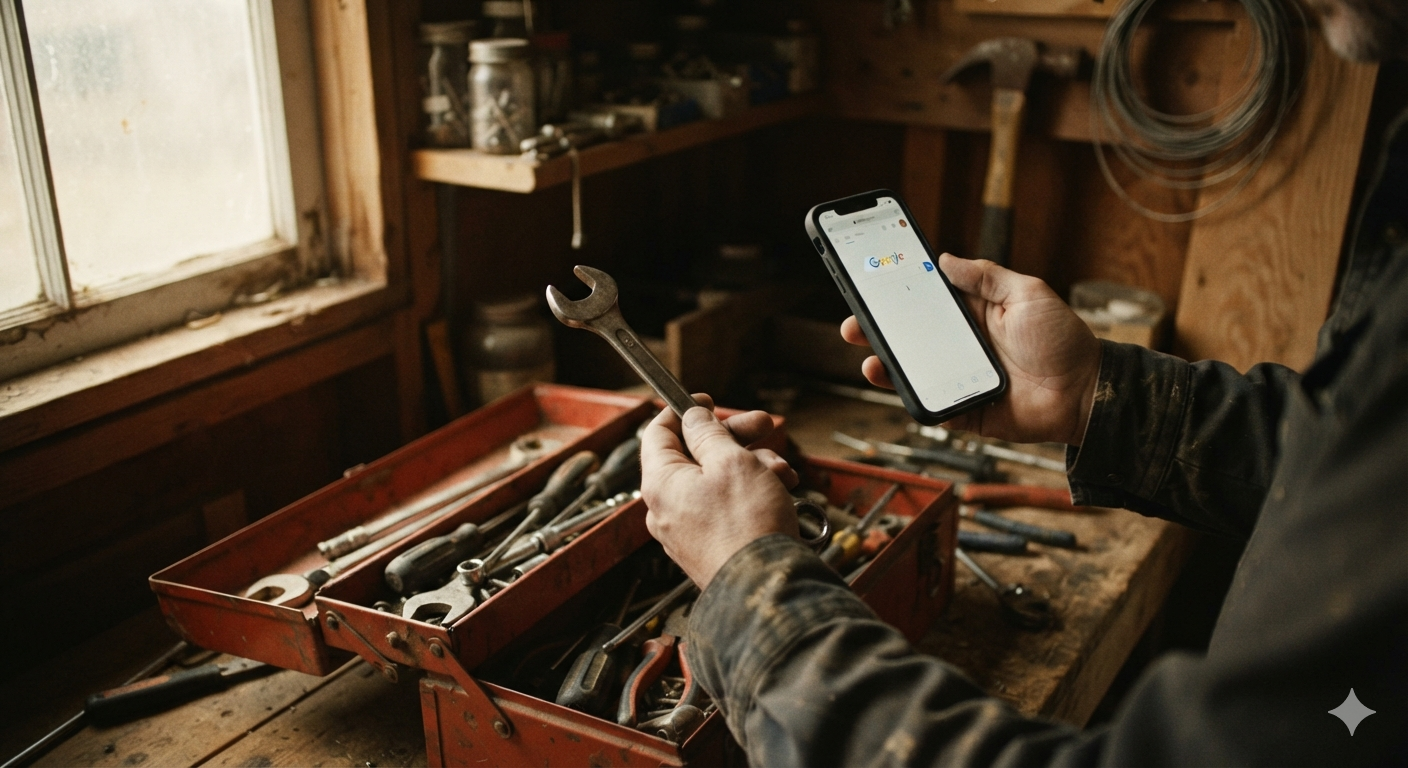
There’s a moment anyone who owns a home eventually recognizes. Something is broken — a leaking pipe, a wall coming down, a switch that sparked when it shouldn’t have. A phone is in one hand, a search bar open in the other. On one side, a tutorial and the promise of doing it yourself. On the other, a phone call and the admission that this might be outside what you can safely handle. DIY vs hire a pro is a decision homeowners make dozens of times over a lifetime. The honest answer depends on the project in front of you, not which side of the debate you generally prefer.
The Case for DIY: Competence Is Built, Not Purchased
Start with the obvious part: money. Take straightforward, cosmetic work — painting, basic flooring, a tile backsplash, simple fixture swaps. The labor markup a contractor charges is often the majority of the bill, not the materials. Skip it, and savings routinely run 40 to 60 percent. On a mid-sized project, that’s thousands of dollars for work that doesn’t need a license to do safely.
But money isn’t the best reason. The better one is what happens to a person who keeps outsourcing the physical maintenance of their own life. A quiet erosion sets in when every broken thing gets handed to someone else by default. That’s the exact pattern explored in Calling the Guy. The job never demanded the outsourcing. Reaching for the phone just became the reflex before the toolbox got considered. Confidence with your hands builds through use, so skip that process long enough, and you end up strangely helpless inside your own house.
There’s also the version of the job you get when you do it yourself: unhurried. Nobody’s clock is running against you. And none of this has to be all-or-nothing. Plenty of homeowners already run a hybrid approach without calling it a strategy. They handle the demo and the painting themselves, then save the check for parts of the job where a mistake is genuinely dangerous.
The Case for Hiring a Pro: Some Mistakes Cost More Than the Job
Calling a professional isn’t about laziness. It comes down to one thing the DIY case glosses over: some home projects are recoverable if you get them wrong. Some just aren’t.
Start with physical risk. More than 290,000 people end up in the emergency room in a typical year from home improvement accidents. And roughly 25,000 are serious enough to require hospital admission. Ladders alone send close to 194,000 people to the ER annually, and they’re tied to around 300 deaths. It’s rarely the exotic project that gets people hurt. More often, it’s the ordinary one, tackled with a little more confidence than preparation.
Then there’s the mistake that doesn’t show up right away. Electrical and plumbing work done wrong can sit undetected behind a wall for years before it causes a fire, a leak, or a mold problem — one that costs far more than hiring the job out would have. That’s exactly why it’s easy to underestimate.
Permits add another wrinkle DIY culture tends to wave off. A significant share of homes carry unpermitted work, which becomes a real headache the moment the home changes hands: inspections flag it, lenders decline to finance around it, insurers deny coverage tied to it. None of this costs you anything the day you skip the permit. It shows up later, as someone else’s problem to discover.
There’s the plain math of time, too — a licensed professional typically finishes a job several times faster than a first-timer. And there’s liability, a risk that has nothing to do with your own competence. Bring an unlicensed, uninsured worker onto your property and have them get hurt on the job, and it can become your problem. A licensed contractor carries insurance for exactly that reason.
DIY vs Hire a Pro: The Only Question That Matters
Both sides above are right, honestly, which is what makes this genuinely tricky. Competence has to be built somewhere; reflexively outsourcing everything has a cost of its own. But not every mistake weighs the same. Getting the paint color wrong costs you a weekend, but getting the wiring wrong can cost you the house.
What settles it isn’t which side you find more persuasive in theory. It’s narrower: what does it actually cost you to be wrong on this specific project? A crooked shelf is a cosmetic miss — annoying, cheap to redo, zero real risk. A mis-wired subpanel is a structural one, and its failure mode includes fire. Both start with the exact same confident thought: I think I can handle this myself.
There’s a personal tally worth being honest about here. I’ve hired someone for jobs I probably could have muddled through myself, and made the opposite call more than once — a project needing a professional’s eye a few hours after I’d convinced myself it didn’t. Neither instinct is automatically the smart one, since the skill is in sizing up the stakes first.
The most experienced tradespeople and the most capable DIYers tend to land in the same place, even if they’d never phrase it the same way. Do the cosmetic, low-stakes work yourself. Hire out anything where a mistake is expensive, dangerous, or invisible until it isn’t.
A quick gut-check, if you want one: what’s the worst realistic outcome? If it’s “I redo it next weekend,” DIY wins by default. Take the savings, take the practice. If it involves a code inspector, a hospital, or a buyer’s inspection report five years out, everything changes. It was never really about confidence. It was about whether you’d priced the downside before you picked up the tool, or the phone.

Leave a Reply