
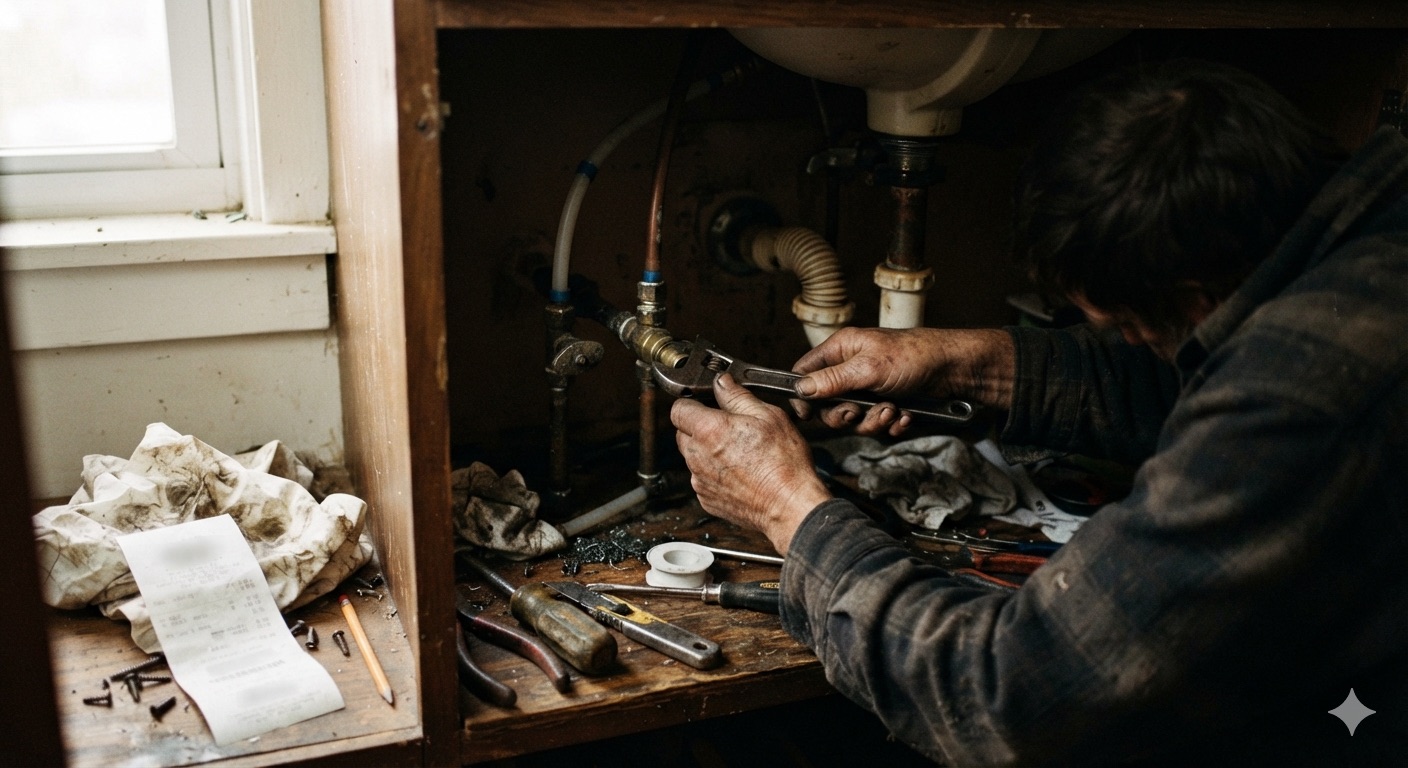
There’s a moment right after you decide a project is safe enough to try. No gas line. No main electrical panel. Nothing that turns a mistake into an emergency. The decision should be easy from here. It isn’t. What’s left is a quieter resistance. It’s the sense that a weekend spent fumbling through a job a pro could finish in an hour is a waste of a weekend. That resistance is the real obstacle, worth looking at directly instead of letting it win by default.
Call it what it is: an excuse dressed up as efficiency. Nobody actually admits they’re scared of being bad at it. Instead they say it’s not worth their time, or that they’ll just call someone. Both can be technically true and still dodge the real reason. Once a task lands in the safe category, the only thing left in the way is the fear of looking clumsy in your own garage.
The Project Is Never Really About the Project
Here’s the part that gets lost in a simple cost comparison: the project was never really the point. Fixing the running toilet or hanging the shelf is just the surface event. Underneath it, something else is happening. Your brain is forming new neural pathways it doesn’t build from routine. That’s the kind of novel, hands-on problem-solving consistently linked to slower cognitive decline as people age. Passive consumption doesn’t do this. Watching someone else work doesn’t do this either. The benefit only shows up when your hands are the ones doing the figuring out, mistakes and all.
And the confidence that comes out the other side doesn’t stay contained to the garage. Someone who’s fixed a running toilet is a slightly different person than they were the morning before. Not because the toilet matters. Because they’ve proven something small and concrete to themselves. They can meet an unfamiliar problem and come out the other side having solved it. That evidence compounds over time. It surfaces later, in a conversation you might’ve otherwise avoided, or a decision you’d normally defer. It shows up in a moment where you’d have assumed someone else simply knew better. A small project, well-attempted, is a rehearsal for every larger kind of self-trust.
Twice the Time, Still a Profit
Here’s where the math gets interesting, and it’s not the math most people run. Suppose the project takes three times as long as a pro would need. Add a wasted first attempt and an extra trip to the hardware store for a missing part. In the worst case, the total ends up costing roughly what hiring someone would have anyway. On a pure dollars-in, dollars-out ledger, that looks like a wash at best.
But the ledger is missing a column. It doesn’t count the confidence. It doesn’t count the working knowledge of your own house. And it doesn’t count the afternoon you spent awake and engaged, instead of sedentary in front of a screen while someone else handled it. Weigh those in, and equal cost stops meaning no better off. A weekend spent making mistakes on your own bathroom sink is a weekend you were genuinely present for. More alive in it, frankly, than you’d have been watching a stranger work while the television ran in the background. That’s not a consolation prize for failing to save money. That’s the actual return.
It Was Never a Waste of a Weekend
None of this is a case for bravado. The boundary from DIY vs. Hire a Pro still holds. Know the difference between a mistake that costs a weekend and one that costs the house. Stay firmly on the safe side of that line every time. Nothing here argues for opening an electrical panel without understanding what’s behind the cover. Nothing here argues for skipping the research on a task where getting it wrong is genuinely dangerous. Caution on the real risks isn’t the opposite of confidence. It’s what makes confidence on everything else trustworthy instead of reckless.
Once a task is actually safe, though, the only thing left in the way is a voice telling you it’s easier to just call someone. That voice isn’t protecting you from anything real. It’s protecting you from feeling incompetent for twenty minutes, which is a far smaller cost than it feels like in the moment. Watching three how-to videos first is fine. Getting it wrong on the first attempt is fine. A second trip to the hardware store, cursing yourself a little in the parking lot, is fine too. None of that is failure. It’s what learning by hand actually looks like, for everyone who’s ever gotten good at anything with their hands.
So the next time something small and safe breaks in your house, notice that resistance for what it is. You already know how to weigh the real risks. This time, weigh the real reward too — and go pick up the tool.

Leave a Reply