
The headline catches your eye and you stop.
A heat wave. Record temperatures in three states. Scientists weighing in. You already know what this is about before you’ve read a single word past the title — and in a way, that’s exactly the problem.
You tap it open anyway. The first paragraph confirms what you already thought, and something settles comfortably in your chest. You read on, nodding slightly, the way you do when someone is finally saying what needs to be said.
Then the third paragraph introduces a caveat. A meteorologist — an actual one, with data — starts explaining the difference between a regional heat pattern and a long-term climate trend. The article isn’t disputing your belief. It’s just adding texture to it, the kind of texture that requires you to hold two things in your head at once.
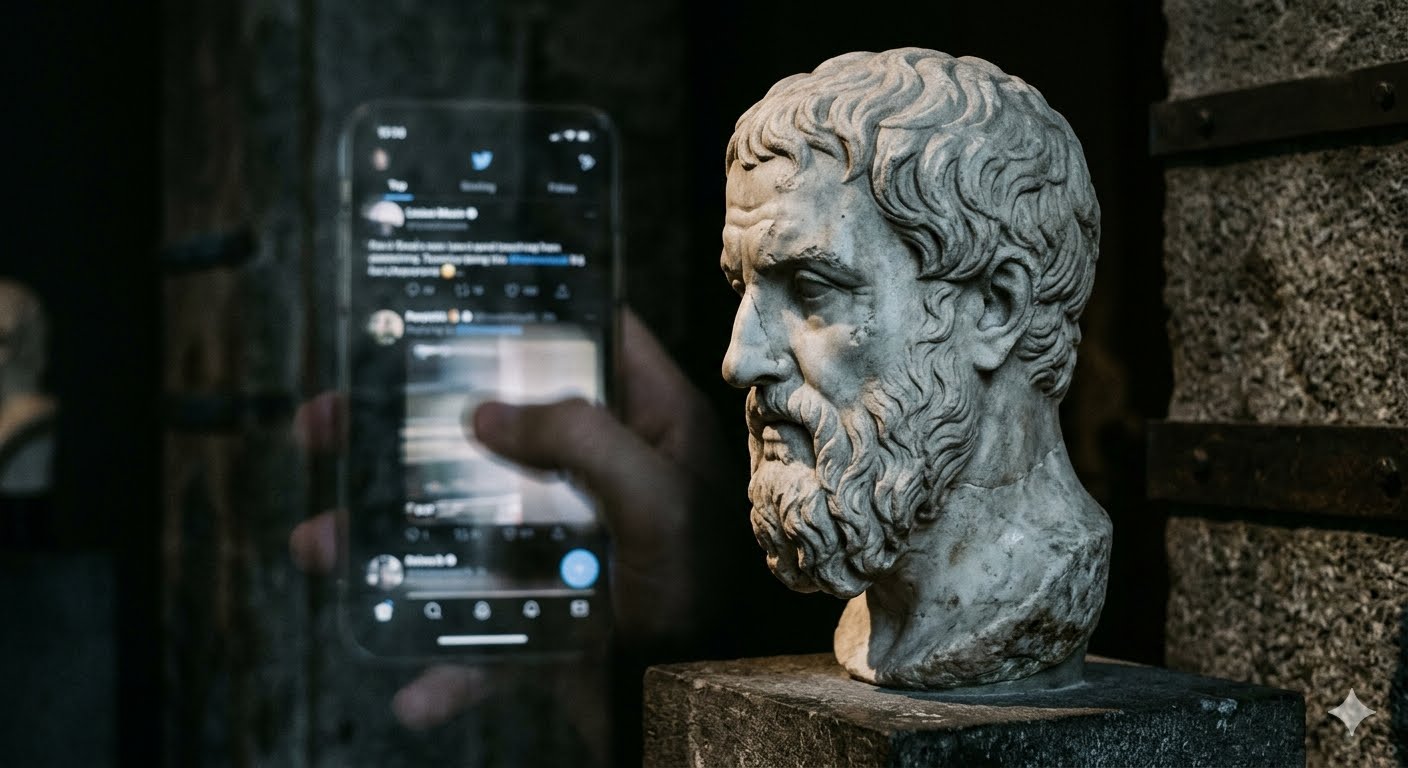
Your thumb moves.
You’re not even fully aware of it. It’s not a decision, exactly — more like a reflex. The screen slides up, the article disappears, and you’re back in the feed. Something else catches your eye. This one’s cleaner. More direct. No caveats.
You slow down for this one.
Here’s what’s worth sitting with: the article you skipped wasn’t arguing against you. It wasn’t written by someone trying to change your mind. It was written by someone trying to explain something with more precision than a headline allows — and that precision was the thing your thumb rejected.
Not the conclusion. The complexity.
This happens in every direction, across every topic, to nearly everyone. The person whose beliefs sit opposite yours does the exact same thing with different articles. Their thumb knows too. We’ve all quietly trained ourselves to treat nuance like interference — static between us and the signal we were already tuned to receive.
The strange part isn’t that it happens. The strange part is how convinced we remain, afterward, that we are people who follow the science. Who consider the evidence. Who form our opinions carefully.
And maybe we do — sometimes. But the feed doesn’t know that. The feed only knows what made you stop and what made you keep going.
So does your thumb.
What would it actually cost you to finish the article?

Leave a Reply